
Horry County Probate Court Records
Horry County Probate Court handles estates, wills, guardianships, conservatorships, trusts, involuntary commitments, marriage licenses, minor settlements under $25,000, wrongful death and survival settlements, and concurrent power-of-attorney matters. Probate Court sits on the second floor of the Horry County Judicial Complex at 1301 Second Avenue in Conway. The office phone is 843-915-5370.
Probate Judge R. Allen Beverly, Jr. is the Horry County Probate Judge. The county biography states that he is a Conway native, a Coastal Carolina University graduate, a University of South Carolina School of Law graduate, and a former Assistant Solicitor, public defender, and private practitioner. He was elected Probate Judge in 2014 and reelected in 2018 and 2022.
The South Carolina Judicial Branch Probate Court page explains statewide probate jurisdiction and probate judge terms.
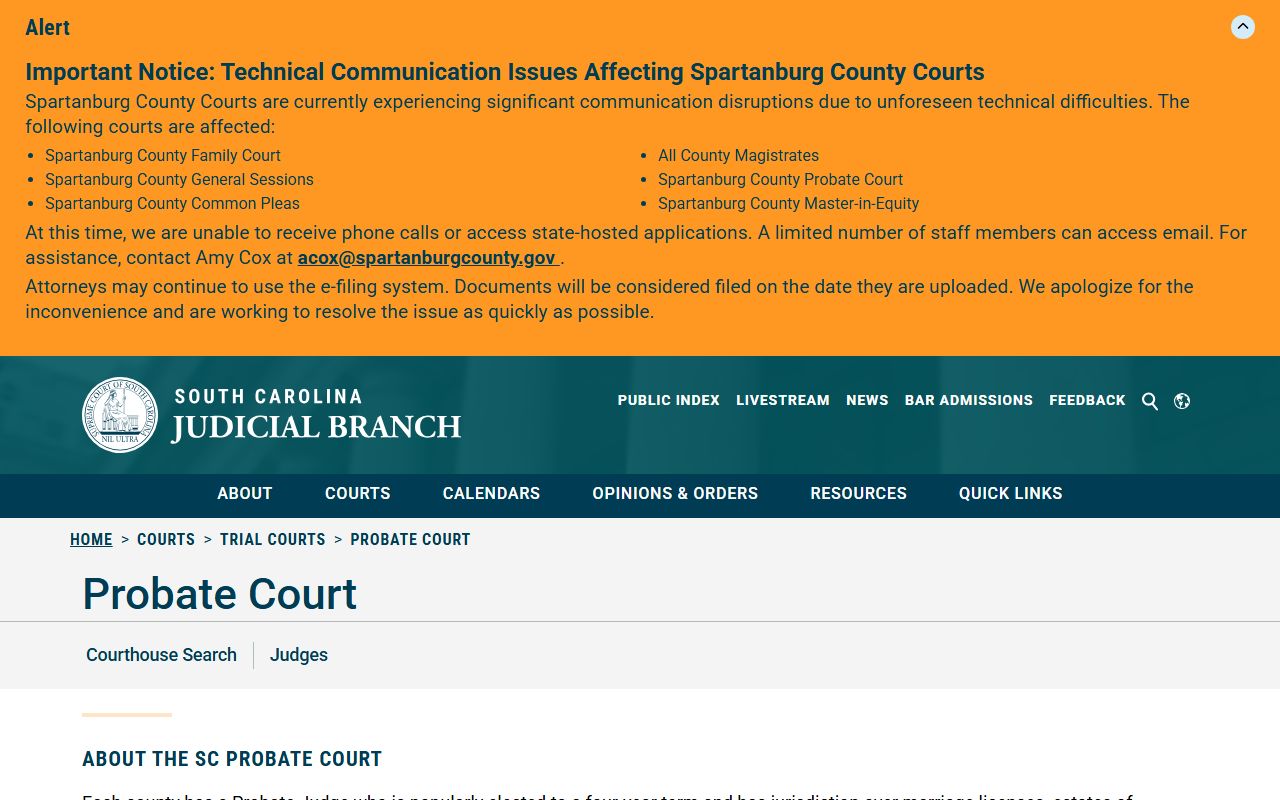
That statewide source frames the local Horry County Probate Court work within South Carolina's probate court system.
Horry County Probate Court
Judge: R. Allen Beverly, Jr.
1301 Second Avenue, second floor
Conway, SC 29526
843-915-5370
Horry County Probate Terms
Probate records use terms that can be plain once the roles are separated. A will names people and property. The court appoints or recognizes a person to handle estate work. Guardianship and conservatorship records deal with people who need legal support or financial management, not just deceased-person estates.
- Testator
- The person who made a will.
- Executor
- The person named in a will to carry out estate duties, often called a personal representative after appointment.
- Intestate
- Dying without a valid will, which means state law controls who may inherit.
- Guardianship
- A court arrangement for personal decision-making for a minor or protected person.
- Conservatorship
- A court arrangement for management of property or financial affairs.
- Ancillary administration
- A local estate process that may be needed when a nonresident decedent owned property in Horry County.
South Carolina probate law also distinguishes informal and formal probate. Informal probate may proceed where there is no contest and no demand for notice. Formal probate is used when a dispute, unknown heirs, a copy of a will, or a court ruling is needed.
Search Horry County Probate Records
The official sources reviewed did not show a separate Horry County online probate case-search database. Probate users should start with Probate Court for file-copy questions and the Horry Probate forms page or SCCourts probate forms for filings. County FOIA is not the first path for probate case files, although it may apply to county administrative records.
- Identify the probate matter type, such as estate, will, guardianship, conservatorship, trust, marriage-license copy, settlement, or commitment-related matter.
- Confirm whether Horry County is the correct venue by the decedent's domicile or by Horry County property.
- Call or visit Horry County Probate Court for file-copy access because no separate local public probate search was located.
- Use the Horry Probate forms page or statewide SCCourts probate forms for required filing packets.
- Ask the court before requesting sensitive guardianship, minor, commitment, or sealed material because access may be restricted.
The official Horry County Probate Court overview identifies the local office that handles probate filings and record questions.
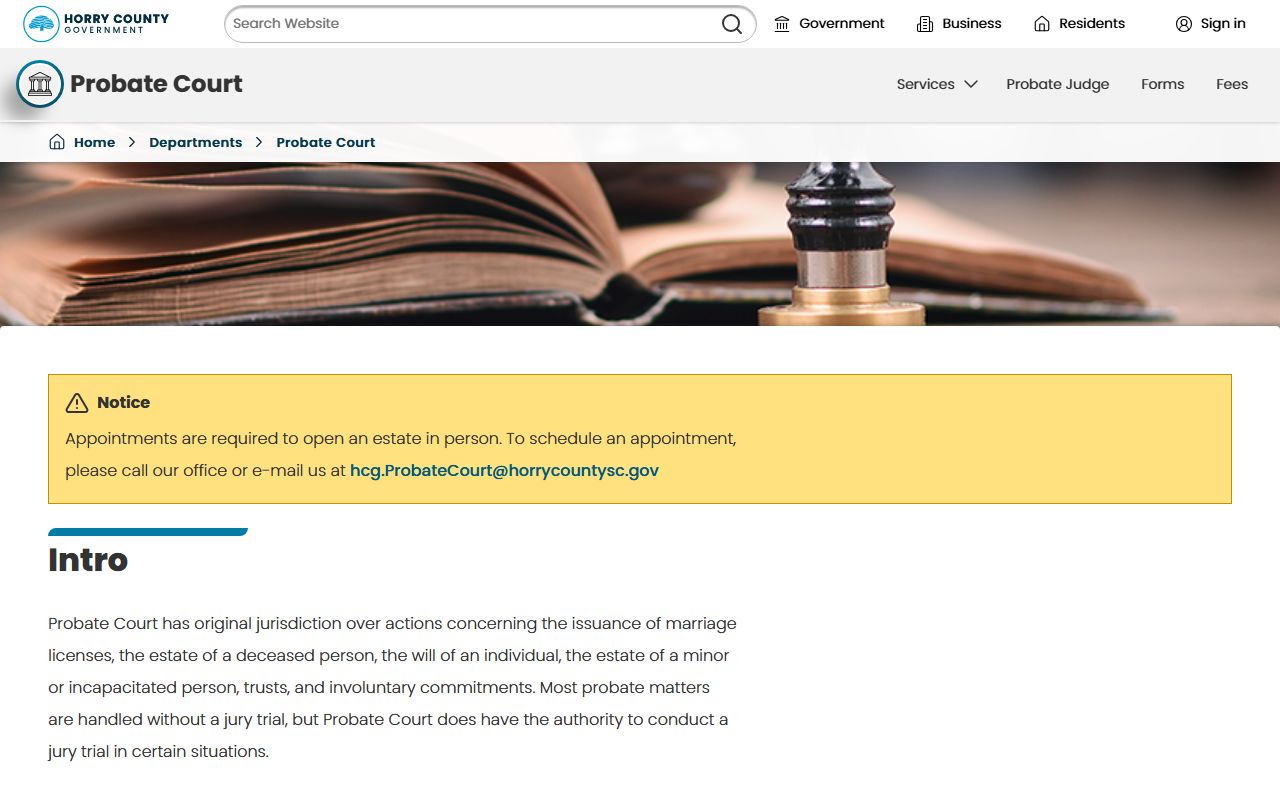
That local page is the main starting point when a probate search cannot be completed through a public online index.
Horry County Estate Process
Horry County estate administration begins with venue and document review. Probate forms must be filed in the county where the decedent was domiciled. If the decedent lived in another state but owned Horry County property, ancillary administration may be required. The original will should be delivered to Probate Court within 30 days after death.
- Determine whether Horry County is the correct probate venue.
- Deliver the original will within 30 days after death when a will exists.
- Choose informal, formal, ancillary, or small-estate procedure based on the facts.
- File the required application, petition, and supporting forms.
- Obtain appointment of a personal representative when appropriate.
- Give notices, identify heirs or devisees, inventory assets, handle creditor claims, and pay valid debts.
- File the required inventory, appraisement, accounting, closing statement, or final settlement documents.
- Use formal proceedings when disputes, will contests, unknown heirs, or court rulings are needed.
The Horry estate service page describes the local estate paths and references informal probate under S.C. Code 62-3-204.
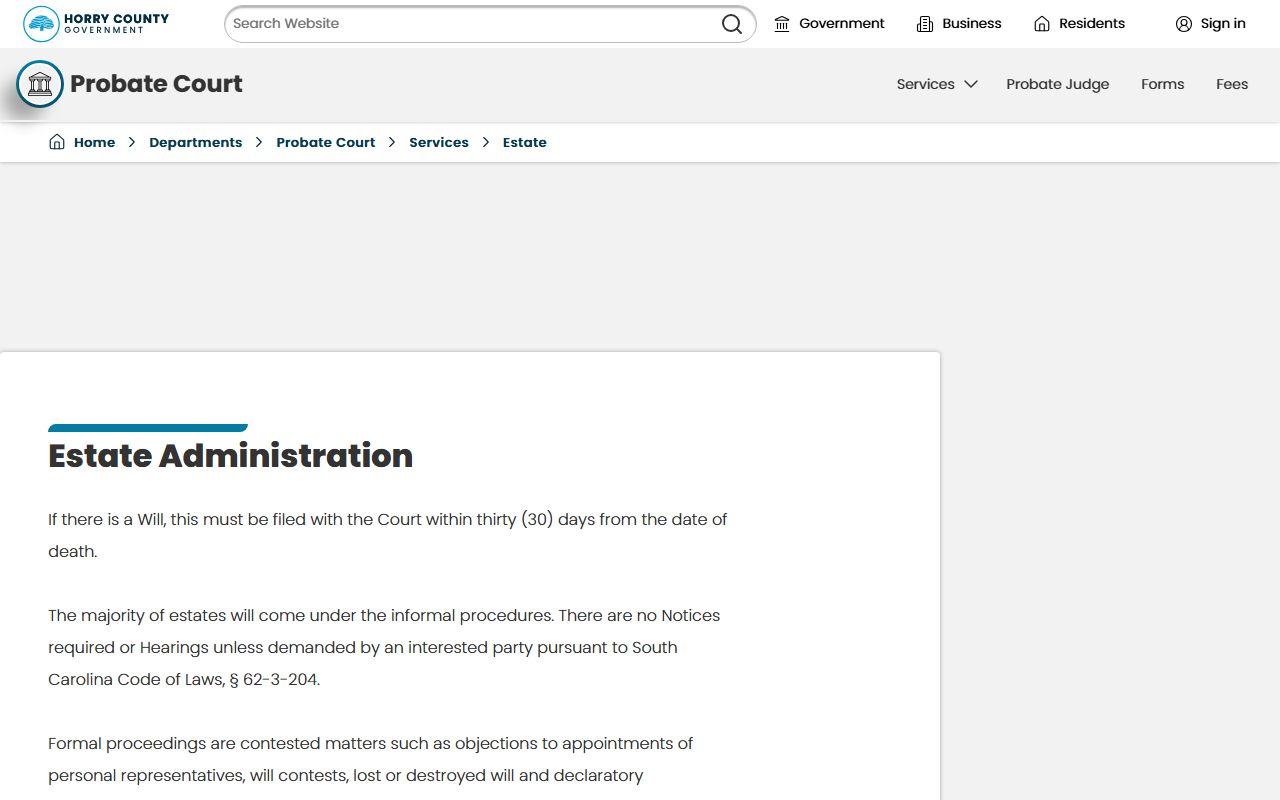
Estate-administration records are often the core file set in a Horry County probate records request.
Horry County Probate Fee Caveats
The inspected official Horry Probate pages did not locate a public probate filing fee table. Because fee amounts can control whether a filing is accepted, the safest route is to confirm current probate filing, certified-copy, and packet costs with Horry County Probate Court before mailing forms or arriving at the counter.
| Probate Item | Amount or Action |
|---|---|
| Original probate application | Confirm current filing fee with Horry County Probate Court |
| Letters testamentary or letters of administration | Confirm current issuance or copy fee with Probate Court |
| Certified probate copy | Confirm current copy and certification cost with Probate Court |
| Guardianship or conservatorship filing | Confirm current filing fee with Probate Court |
| Small Estate Packet | Use Horry Probate forms and confirm filing cost before submitting |
| Marriage-license certified copies | Use the separate Probate marriage-copy fee schedule |
The South Carolina Probate Court statutes provide the court framework, but local filing charges should still be checked with the Horry County office.
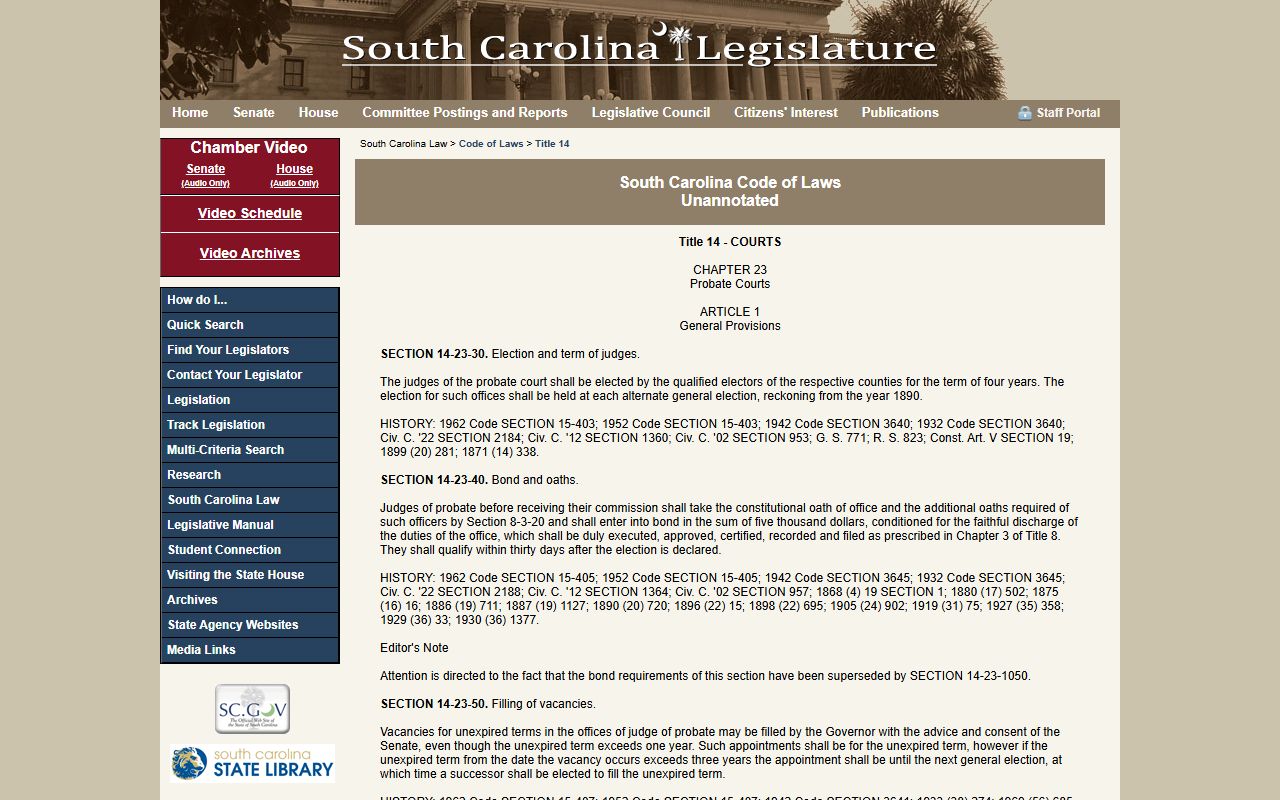
The statute source supports the Probate Court authority, while the fee caveat prevents unsupported dollar amounts.
Horry County Probate Forms
Horry Probate points users to state and local form sources. The categories include Estate forms, Guardian and Conservator forms, Marriage License forms, Involuntary Commitment forms, Trust forms, Power of Attorney forms, and Minor or Wrongful Death Settlement forms. Local packets are especially useful when the filing path is small estate, marriage licensing, or settlement-related.
- Estate forms for opening, administering, and closing an estate.
- Guardian and Conservator forms for protected-person matters.
- Trust and Power of Attorney forms for probate-related authority issues.
- Marriage License forms for applications and certified copies.
- Minor Settlement and Wrongful Death Settlement forms for court approval matters.
- Involuntary Commitment forms, which may involve sensitive and restricted records.
The Horry County Probate forms page gathers local Probate Court form routes in one official place.
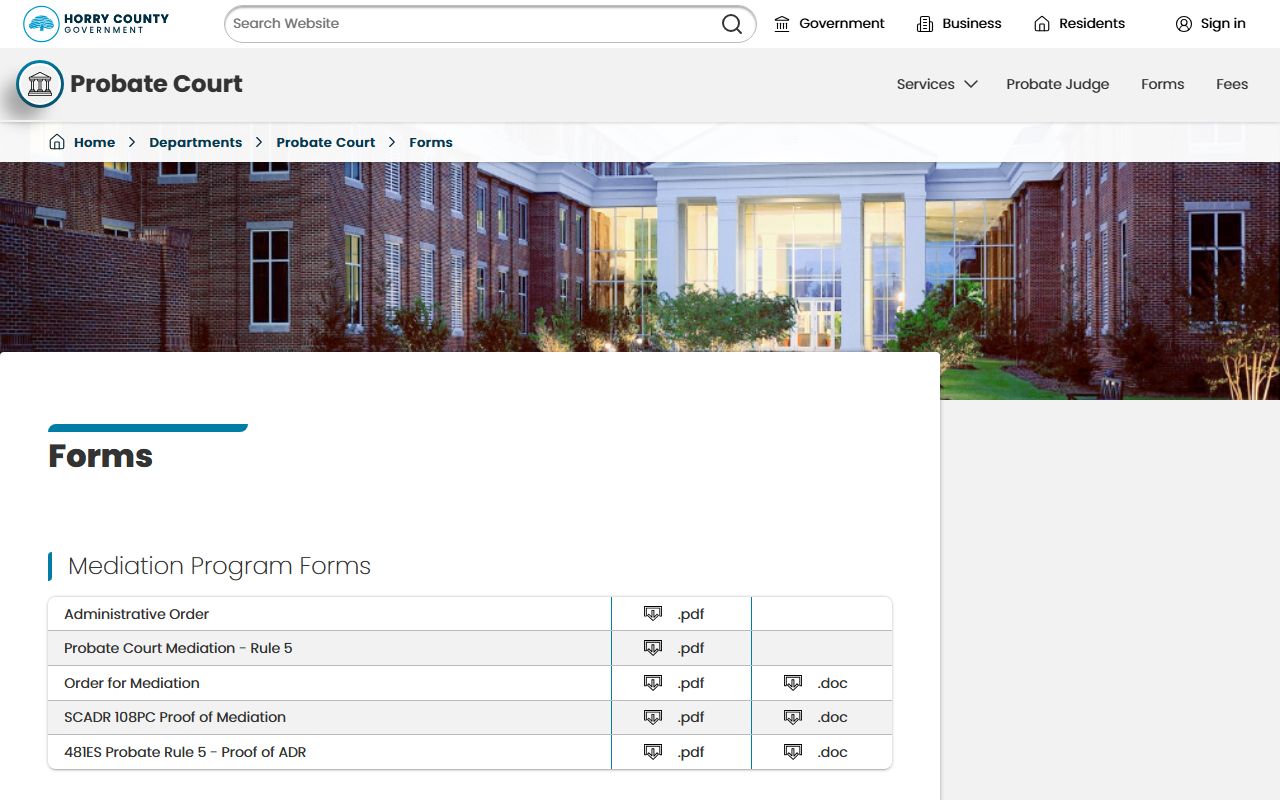
Forms help identify the record type before a request is sent to Horry Probate Court.
What Horry County Probate Records Show
A Horry County probate estate file may show the will, application or petition, appointment documents, heirs, devisees, notices, creditor steps, inventory and appraisement, accounting, closing statement, orders, and related filings. A guardianship or conservatorship file may show appointment papers, reports, inventories, accountings, and court orders. Trust and power-of-attorney matters may show petitions, notices, orders, and supporting documents.
Probate Court also handles marriage-license records, but those should not be confused with divorce files. A divorce decree or custody order belongs to Family Court and the Clerk of Court. A death certificate is a vital record, not the same thing as an estate file, even though death is what often starts probate.
Probate Judge Beverly's county biography gives local office context for Horry Probate Court leadership.
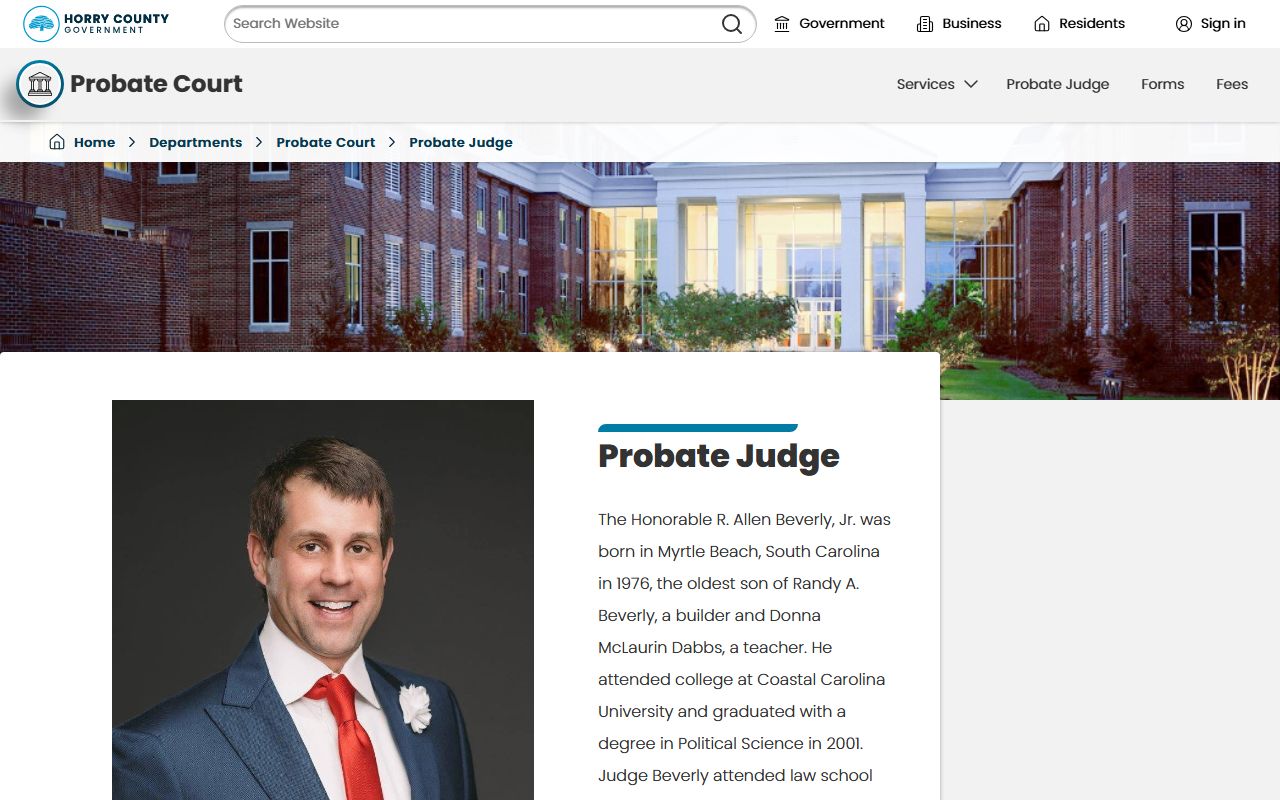
That local authority detail helps distinguish Horry County Probate Court from statewide forms and general court-search tools.
Probate questions tied to a marriage certificate may also connect to Horry County marriage records, but estate and guardianship files stay with Probate Court.
Restricted Horry County Probate Records
Not every probate-related record is an ordinary public file. Involuntary commitment matters are sensitive. Minor settlements, guardianships, conservatorships, financial identifiers, sealed orders, and some protected-person records may require court review or redaction before release. South Carolina personal-identifier rules also limit display of Social Security numbers, driver license numbers, account numbers, passwords, and similar identifiers in internet-accessible court and official records.
South Carolina FOIA supports access to nonexempt public records, but court records are also controlled by court rules, sealing orders, confidentiality statutes, and redaction duties. A person seeking a Horry County probate record should ask Probate Court what can be inspected, what can be copied, and what requires a party, attorney, guardian, personal representative, or court order.
Note: Probate Court is the right first contact for probate case files; county FOIA is mainly a fallback for administrative records.