
Horry County Arrest Records and Court Charges
Horry County arrest records begin with a law-enforcement or booking event. The official county booking app covers people booked at J. Reuben Long Detention Center or by the City of North Myrtle Beach. It can show name, booking number, booking date, release date, arresting agency, home detention status, mugshot ID, charges, bail amount, disposition, and counts. A booking entry helps identify the arrest event, but it does not decide guilt.
Court charges after arrest are the allegations that move into court. They may start through a warrant, ticket, complaint, indictment, lower-court case, or General Sessions prosecution. The Fifteenth Judicial Circuit Solicitor prosecutes criminal violations in Horry and Georgetown Counties, while the Clerk of Court maintains access to court case files. Full outcomes belong in the Horry County criminal court records file, not the booking row alone.
The Horry County booking and releases source supports the arrest records side of the charge pathway.
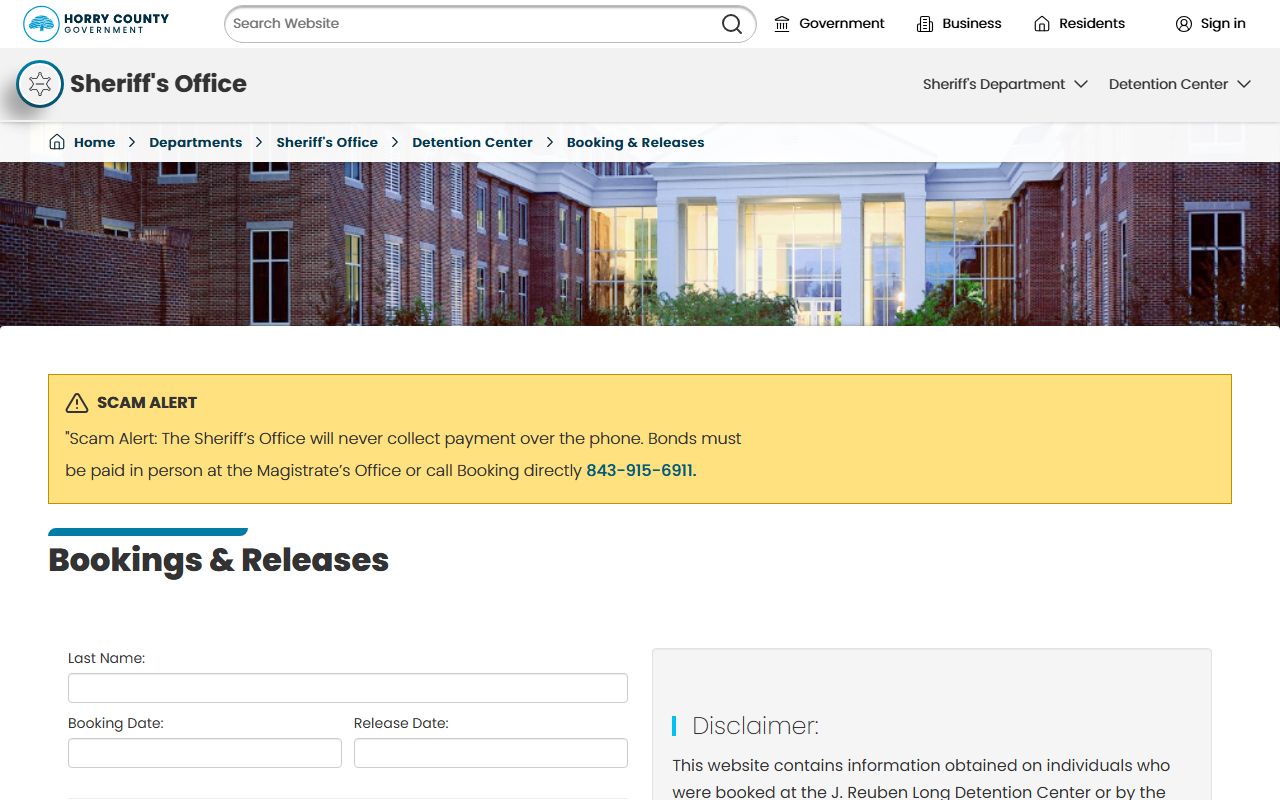
Booking records are useful early in the process because they show custody and charge data before a court disposition may be available.
Find Horry County Arrest Records
The strongest local source for immediate arrest and charge detail is the Horry County bookings app. The app is a JavaScript search tool. Research of the public API showed that it accepts last name, booking date, release date, and county value. The app may load current bookings by default, and results can be sorted by booking date, release date, name, age, ethnicity, booking number, arresting agency, and gender.
| Booking Field | What It Shows |
|---|---|
| Booking number | The jail booking identifier, such as examples beginning with HC in inspected records. |
| Booking and release dates | When the person entered custody and whether a release date is listed. |
| Arresting agency | Examples included Horry County PD, South Carolina Highway Patrol, Myrtle Beach PD, Conway PD, Loris PD, Surfside Beach PD, Aynor PD, and Sheriff's Office. |
| Charge number | A charge identifier. Inspected examples used several formats, so no single format should be assumed. |
| Description | The listed charge text, such as DUI, Failure to Appear, Contempt of Court, Fugitive, or other offenses. |
| Bail amount | The charge-level bail entry, including dollar amounts or NO BAIL SET where shown. |
| Disposition and counts | Booking-related status text and count values when more than one count is listed. |
The Horry bookings API endpoint was the source for exact court charge fields after arrest.
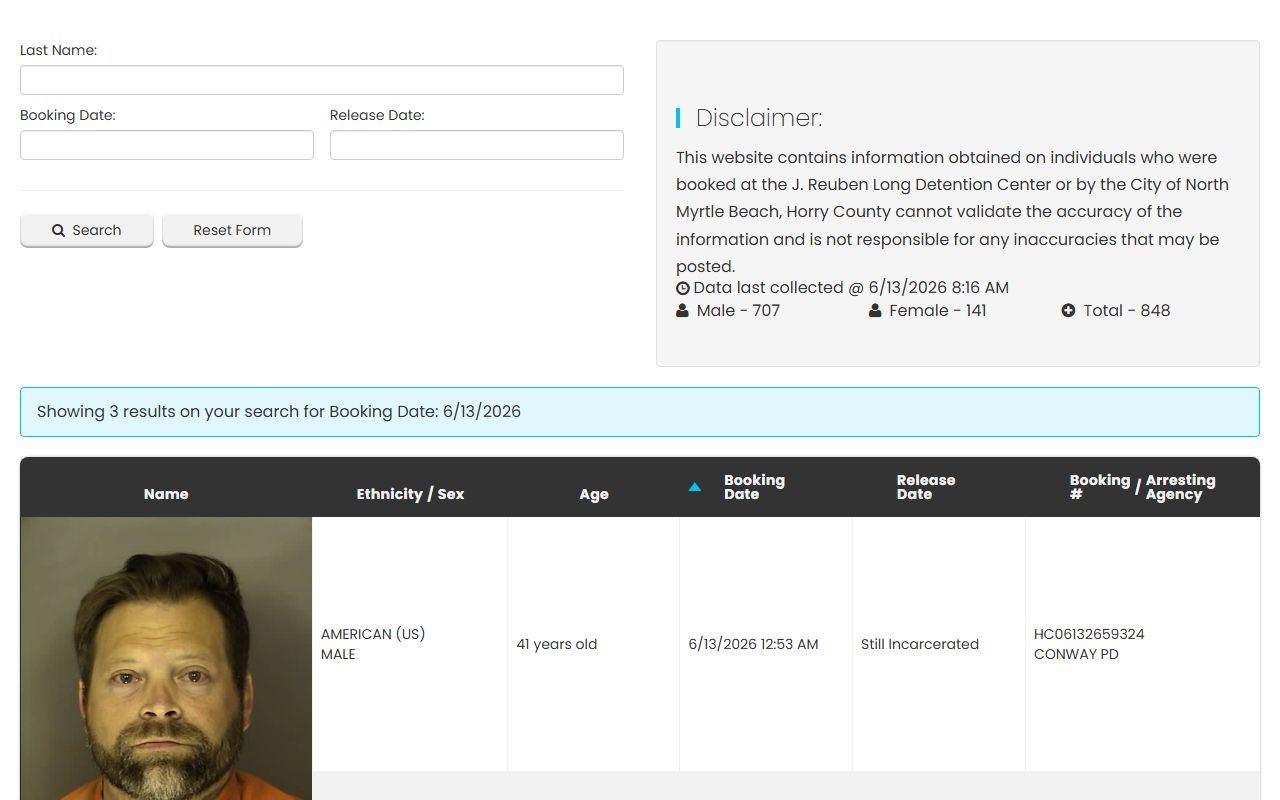
The API field list explains why Horry County arrest records can show charge numbers, bail amounts, dispositions, and counts before the full case file is complete.
Horry County Charging Documents
A court charge record is not just the arrest note. It reflects the allegation placed before the court. In South Carolina, the exact path depends on the offense, court, prosecutor action, and whether the matter is in Magistrate Court, Municipal Court, or General Sessions. Some charges begin with lower-court warrants or tickets. More serious matters may move into General Sessions, where the Solicitor prosecutes the case.
| Document Type | Who Uses It | How It Fits Horry County Charges |
|---|---|---|
| Complaint or ticket | Law enforcement or lower-court filing path | Often starts a Magistrate or Municipal Court matter, including traffic, ordinance, or lower-level criminal cases. |
| Information or prosecutor filing | Solicitor or prosecuting authority | Used when the prosecutor files or proceeds on formal criminal allegations. |
| Indictment | Grand jury process for higher criminal matters | Commonly tied to serious criminal prosecution in General Sessions. |
These terms are best read with the case record. A booking charge may be listed before a charging document is complete, and a charge can change after prosecutor review. DUI and domestic violence matters can also have a local Magistrate Court Division path when jury-trial conditions apply.
Horry County Charge Status
Charge status is the point where many arrest records become confusing. A booking app value such as Pre-Trial or Discharged is not the same as a final court judgment. Public Index actions, court disposition, Clerk records, and Solicitor updates may give a better answer once the case has moved forward. Some booking records may show no listed charges, and some older inspected samples showed redacted or expunged values.
| Status | Meaning in the Arrest-to-Charges Path |
|---|---|
| Pending or pretrial | The charge is still moving through court, bond, prosecutor review, or a scheduled hearing. |
| Amended or reduced | The filed allegation changed, often after prosecutor review, plea negotiation, or court action. |
| Dropped or dismissed | The charge did not proceed to conviction, but the exact reason should be verified in court records. |
| Nolle prosequi | The prosecutor does not proceed on that charge at that time. |
| Expunged or redacted | Public display is removed or limited after legal screening, court order, or privacy rule. |
Use the Horry County Trial Court Public Index to follow the court case after booking. If the court case is not online, contact the Clerk division, the specific Magistrate Court, or the Municipal Court named on the paperwork. Note: a booking disposition should not be used as a final conviction record without court verification.
Horry County Charge vs Conviction
Horry County arrest records can show allegations that never become convictions. A charge may be tied to probable cause, a warrant, a citation, or a prosecutor's filing decision. A conviction requires a guilty plea, trial verdict, or other court outcome that establishes guilt. This distinction affects employment screening, personal review, expungement questions, and how the public reads a case.
| Question | Charge | Conviction |
|---|---|---|
| Basic meaning | An accusation listed after arrest or court filing. | A final guilty outcome for a specific offense. |
| Where first seen | Booking app, warrant, ticket, Magistrate Court, Municipal Court, or Public Index. | Public Index disposition, Clerk copy, or court sentencing record. |
| Can it disappear | It may be dropped, dismissed, reduced, or expunged. | It may be appealed, corrected, or later affected by expungement if eligible. |
| How to verify | Check charge list plus current court case. | Request final disposition from the court that handled the case. |
Horry County Bail and Bond
Bail amounts in arrest records are charge-level booking details. The current bond order should be verified with the detention center, Bond Court, Magistrate Court, or the issuing court. Horry County bond information says Magistrate Office hours are Monday through Sunday, 8:30 a.m. to 11 p.m., and after-hours bonds are handled by the Booking Office. Bond Court at the detention center is listed at 843-915-5145.
Accepted bond payment channels include cashier's check or money order made payable to the county where the person is held, exact cash, and certified bonding company. Credit and debit card bond payments use GovPayNow by phone or website with Pay Location Code 5500, and the user needs the inmate name, case number, and charge amount. A service fee of up to 7% can apply.
The Sheriff civil process source is related to Horry County court charge records because civil process and judgment enforcement are separate from criminal charge filing.
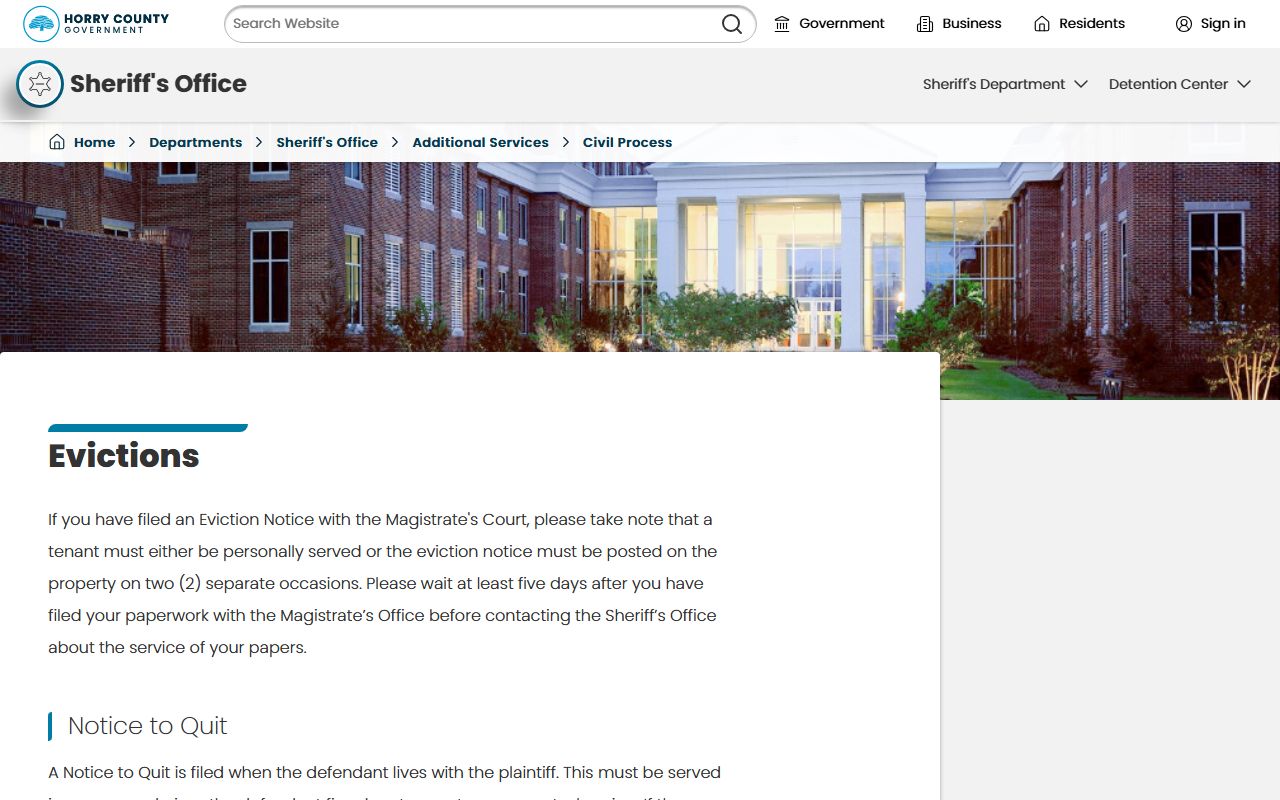
Keeping civil process separate from arrest charges prevents users from treating every sheriff record as a criminal charge record.
The GovPayNow payment source is listed in Horry County bond information for credit and debit bond payments.
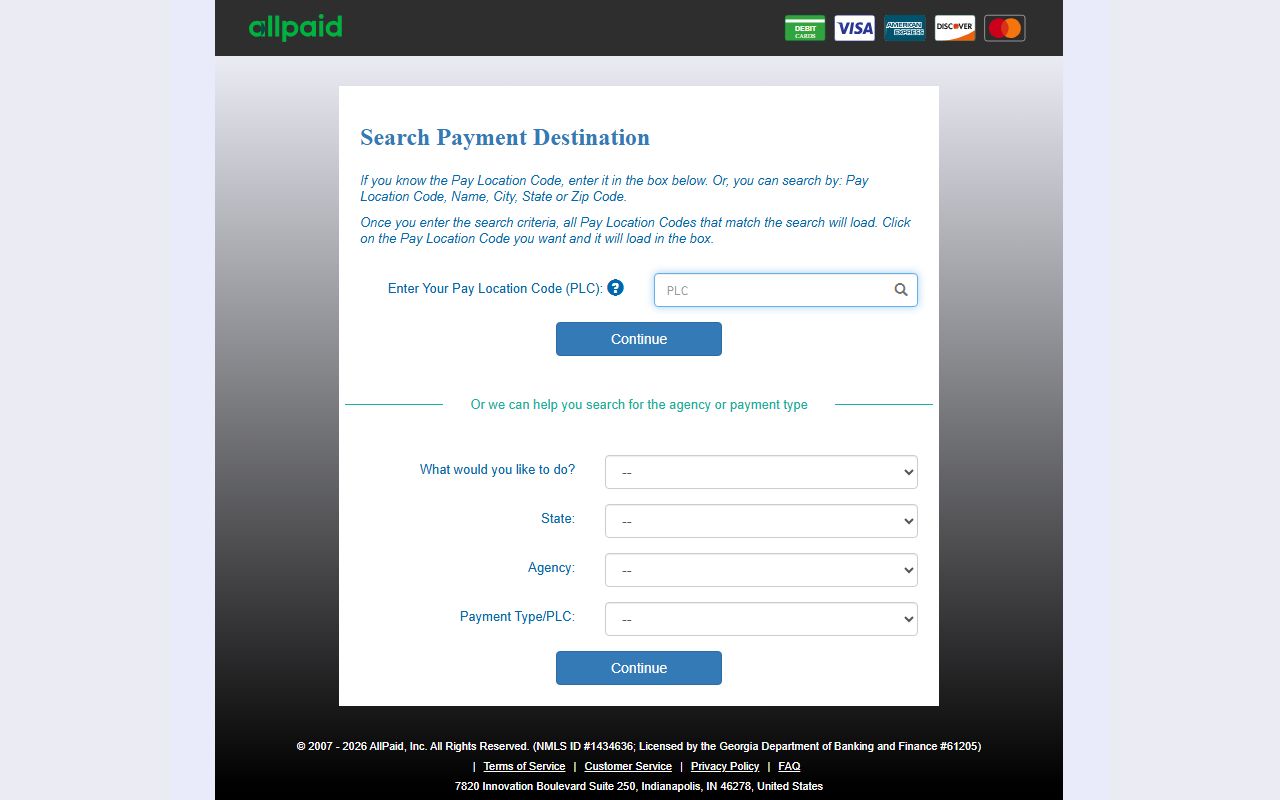
Bond payment details matter because a bail amount in a booking record does not by itself show whether the person has been released or the case is finished.
Access Channels for Horry Charge Records
Use the official channel that matches the record. For jail booking and immediate charge fields, use the Horry bookings app. For filed court cases, use the Horry Trial Court Public Index or contact the Clerk, Magistrate Court, or Municipal Court. For sheriff records that are not visible online, use the Sheriff's Public Information Office request channel. For county administrative records, Horry County Public Information FOIA is the fallback.
- Booking record: Horry bookings app, detention center phone, or HCSO app where the county advertises jail features.
- Filed criminal case: Public Index, Clerk General Sessions, Magistrate Court, or Municipal Court.
- Prosecution status: Fifteenth Judicial Circuit Solicitor when the case is in that office's process.
- Bond detail: J. Reuben Long Detention Center, Bond Court, Booking Office after hours, or official bond payment channel.
- Released records: Sheriff's PIO or County FOIA, subject to exemptions and citizen-access limits noted by county materials.
South Carolina law allows access to many public records, but law-enforcement records can be withheld when release would interfere with enforcement, invade privacy, reveal sources or techniques, endanger safety, or affect fair-trial rights. Personal identifiers are also restricted under S.C. Code 30-2-330.
Restricted Horry County Charge Records
Juvenile charge records are confidential under S.C. Code 63-19-2010. Expunged or sealed charge information may be omitted, redacted, or marked in public systems. The Solicitor screens expungement applications for charges from the circuit where the case originated. Eligibility depends on the charge, disposition, prior history, and statute, so public data should not be used to assume eligibility.
| Record Type | Public Access Limit |
|---|---|
| Juvenile charge | Confidential except for court-authorized or statutory access. |
| Expunged charge | May be removed from normal public display or shown only as redacted. |
| Ongoing investigation | May be withheld if release would interfere with enforcement or safety. |
| Personal identifiers | SSNs, driver license numbers, passports, account numbers, PINs, and passwords are restricted. |
The Public Defender may assist qualified defendants where imprisonment is possible, but that office is not a general civil legal-aid office. Police reports usually come from the investigating agency, not the Solicitor. For final outcomes, request the court disposition from the correct court.